
Vivaldi's Four Seasons: music as description
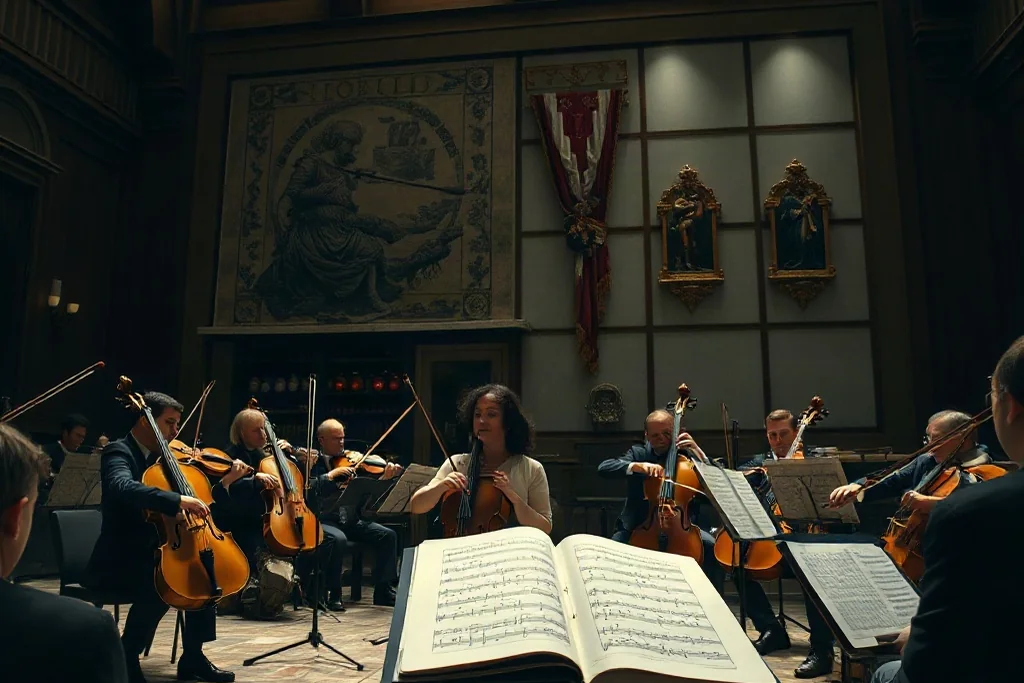
Vivaldi's set of four violin concertos known as the Four Seasons does something unusual for its time: it sets out to describe things. Weather, birdsong, a hunt, a frozen landscape and a village dance are all painted in sound, and the scores are associated with short descriptive sonnets. Whether or not Vivaldi wrote the verses himself, the music and the words were meant to be understood together.
Each season is a separate concerto with the usual three movements, and each is a vehicle for a solo violinist accompanied by a small string ensemble. The descriptive writing is the hook; the craftsmanship underneath is what keeps the pieces in the repertoire.
Music as description
The technique is not complicated. Repeated high notes imitate a bird; a low sustained drone suggests a sleeping shepherd or, in another movement, biting cold; rapid scales suggest wind or a storm. What lifts the set above a novelty is how naturally the imitations sit inside a dance-like rhythmic frame.
Because the references are so clear, this is unusually good repertoire for a beginner. You can check your hearing against something you already know is there.
One season at a time
Spring opens with a cheerful refrain and soon gives way to birds and a murmuring brook. Summer is sluggish heat, then a sudden storm. Autumn moves from a harvest dance to a hunt and finally to a drunken sleep. Winter is shivering cold, a lull of rain, and a finale of wind and ice.
Listening to a whole season at once is the right approach: the three movements belong together, and the contrast between them is part of the design.
How to listen
- Read the descriptive idea associated with a movement, then listen for it.
- Follow the solo violin: it moves between imitation, ornament and pure melody.
- Notice how often a simple repeated rhythm holds the ensemble together.
- Listen for the ritornello, a recurring passage that returns between solo episodes.
The recurring passage is the structural glue. Once you hear it come back, the shape of the movement becomes visible.
The Four Seasons in outline
| Concerto | Images | Character |
|---|---|---|
| Spring | Birds, brook, thunder, dancing | Bright and buoyant |
| Summer | Heat, cuckoo, breeze, storm | Still, then violent |
| Autumn | Harvest, hunt, sleep | Energetic, then heavy |
| Winter | Cold, rain, wind on ice | Brittle and rapid |
| All four | Recurring refrain | Dance rhythm underneath |
Instrumentation and the soloist
The ensemble is strings only, with a keyboard instrument filling out the harmony. The solo violin is asked for double stops, wide leaps and fast figuration, so the piece doubles as a display of technique. In a good performance the display never feels separate from the scene being described.
Because the forces are small, the concertos also work well in a domestic-sized room, which is one reason they became so popular with amateur players and listeners alike.
The concerto form Vivaldi inherited
A Baroque concerto for a solo instrument is built on alternation. The ensemble plays a passage that returns, and between its returns the soloist takes over with material of its own. The returning passage is the landmark; the solo episodes are where the interest and the virtuosity live. Vivaldi did not invent the pattern, but he used it with unusual clarity, and the Four Seasons are a textbook in how much variety the alternation can carry.
Once you hear the alternation, the length of a movement stops being a problem. You are no longer waiting for something to happen; you are listening for the familiar passage to come back and for the soloist to have changed the colour in between.
Where to go next
Choose one movement, learn the image attached to it, and then listen to a different movement from another season. The contrast between two short pieces teaches more about the set than hearing all twelve movements in a row.
Read next
Beethoven's Fifth Symphony: four notes that changed everything
How a tiny rhythmic cell becomes the organising idea of an entire symphony.
Mozart's Requiem: a mass left unfinished
A funeral mass completed by others, and what that means for how we hear it.
Tchaikovsky's Nutcracker: from stage work to concert suite
Why a ballet score became one of the most familiar orchestral suites.