
Tchaikovsky's Nutcracker: from stage work to concert suite
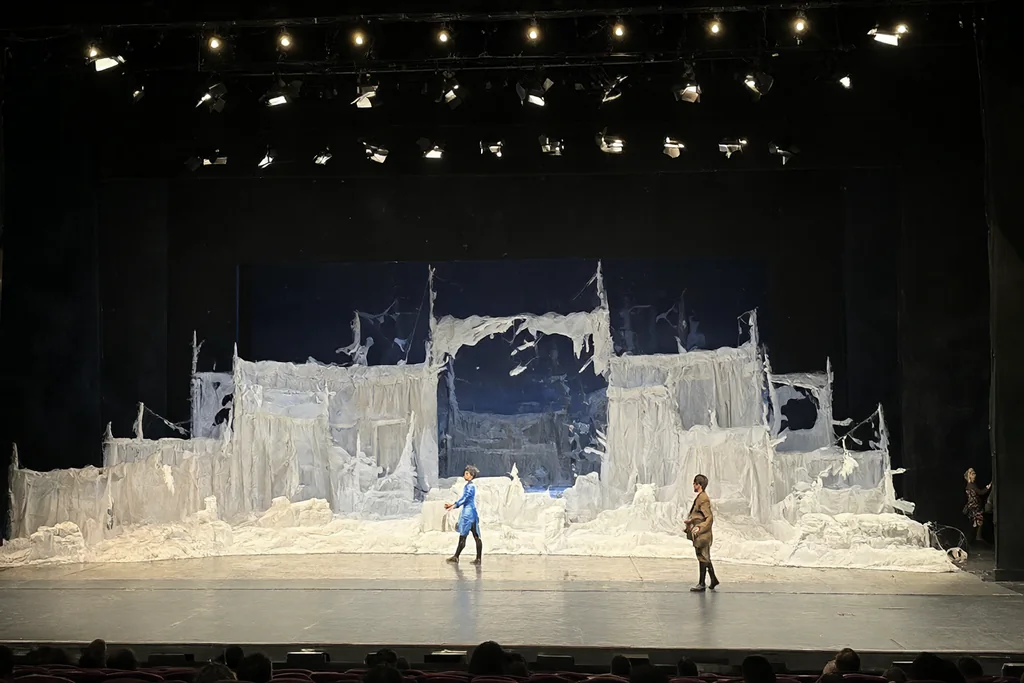
Tchaikovsky's ballet about a Christmas toyshop became, in the form of an orchestral suite, one of the most familiar pieces in the concert repertoire. The suite takes the most vivid numbers from the stage work and arranges them as a short concert programme, so a listener meets the music without the narrative that surrounds it.
That arrangement is worth understanding. A ballet score is written to accompany dancing, with numbers paced to the stage. A suite reorders and selects, and the result is a set of sharply characterised pieces that work perfectly well on their own.
How a ballet becomes a suite
The composer or a later editor selects the numbers with the strongest identity and the best contrast between them. Short, lively dances alternate with slow, lyrical ones, and an orchestral miniature may stand in for a change of scene. The suite thus becomes a kind of portrait gallery rather than a story.
For a new listener this is an advantage. Each number is short enough to hold in mind completely, and the variety means the attention never settles for long.
The numbers and their character
The suite opens with a miniature overture, bright and busy. There follows a march with a toy-soldier rhythm, then a sequence of dances associated with different regions, each with its own tempo and orchestral colour. A slow, sugary movement for a solo instrument provides the contrast, and the set ends with a dance that grows from delicate to brilliant.
Listen for how each number announces its character in the first few bars. Nothing is ambiguous about a Tchaikovsky dance.
Listening points
- Each dance has a distinct national or character flavour.
- Woodwind solos carry several of the most memorable melodies.
- A harp and celesta give one movement its particular shimmer.
- The final number accelerates from small to large forces.
The percussion section is used sparingly, which makes each entrance tell.
The Nutcracker suite in outline
| Number | Character | Orchestral feature |
|---|---|---|
| Miniature overture | Busy, light | High strings, quick figures |
| March | Rigid, toy-like | Trumpets and steady beat |
| Regional dances | Varied, exotic | Distinct wind colours |
| Slow movement | Tender | Solo instrument with harp |
| Finale | Building brilliance | Full orchestra, then hush |
Why it is played so often
Two reasons reinforce each other. The melodies are unusually memorable, and the orchestration is unusually transparent, so the music works at any level of attention. It rewards a close listen and it survives being half heard. Few pieces manage both.
There is also a seasonal association that has attached itself to the ballet. The music does not require it, and hearing the suite in the middle of the year is a useful test of how much of the effect depends on habit.
Ballet music heard without dancers
Stage music has to fit choreography, which imposes regular phrasing and clear cues. When the dancing is removed, those regularities are still audible, and they explain why the numbers are so easy to follow. The phrase lengths are generous and the contrasts are unambiguous.
Detached from the stage, the music becomes a set of character pieces. Attached to it, the same music is a partner to movement. Both are legitimate ways to listen, and a reader who knows the ballet will hear cues that others simply hear as accents.
Reading a programme note correctly
Programme notes for this music often supply a story, and stories can crowd out listening. A useful compromise is to read the note once, before hearing the piece, and then put it away. The images will still be available if you want them, but they will not be standing between you and the sound.
Where a note describes instruments, it is usually reliable. Where it describes the composer's intentions, it is usually inference. Both are worth reading, as long as the difference is kept in view.
Where to go next
Pick the slowest number and listen only to the accompaniment. The melody is so familiar that the supporting parts are usually missed, and they are where much of the craft sits.
Read next
Beethoven's Fifth Symphony: four notes that changed everything
How a tiny rhythmic cell becomes the organising idea of an entire symphony.
Vivaldi's Four Seasons: music as description
What a concerto can do when it sets out to paint weather, birds and seasons.
Mozart's Requiem: a mass left unfinished
A funeral mass completed by others, and what that means for how we hear it.