
Mozart: clarity, contrast and dramatic timing
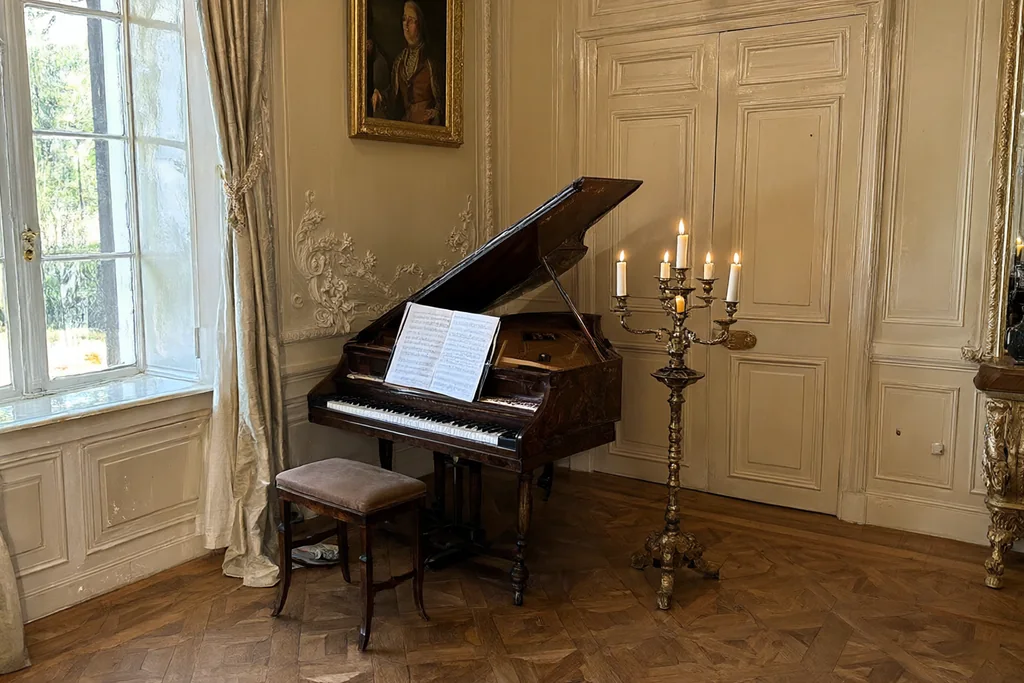
Mozart's music is often described as effortless, and the description is both a compliment and a trap. The surface is transparent: melodies are easy to sing back, textures are rarely crowded, and a first hearing rarely leaves the listener puzzled. Underneath, the writing is unusually precise. Every phrase is balanced against the next, and the apparent ease is the result of decisions that are hard to make and easy to overlook.
He worked in every genre available to a composer of his time, from opera to chamber music, and he moved between them without changing his voice. This profile explains what makes that voice recognisable and suggests where to begin.
The illusion of ease
Mozart's phrases tend to arrive in pairs: a question and an answer, a rise and a fall. When the pattern is established, he breaks it. A phrase that should close a step higher lands unexpectedly low, or an accompaniment that has been steady becomes restless. The surprise is never chaotic, because the pattern was clear enough to be felt before it was disrupted.
This combination of predictability and disruption is why the music feels alive. It is the same technique a good storyteller uses, and Mozart was writing for an audience that listened closely.
Why contrast matters more than prettiness
Within a single movement Mozart will set a singing idea against a busy one, or a bright key against a darker one. The contrasts are not decorative: they define the shape of the piece. A listener who tracks only the beautiful tunes will miss half of what is going on.
The clearest examples are in his operas, where characters with opposite temperaments are given opposite music. The same instinct shapes the instrumental works, where passages of quiet clarity alternate with passages of urgent activity.
Four genres to explore
- Opera, for character expressed through voice and orchestra together.
- Piano concertos, for a soloist who converses with the ensemble rather than competing with it.
- String quartets, for four equal voices in intimate conversation.
- Symphonies, for the largest canvas and the clearest sense of dramatic pacing.
Starting with opera arias out of context is fine, but the drama is sharper in place, where the surrounding scenes set up what an aria releases.
Listening for the orchestration
Mozart's orchestra is smaller than the Romantic one, and each instrument is used for a reason. Woodwind lines often answer the strings rather than doubling them; a solo wind may take over a melody at exactly the point where a singer would breathe. Following those handovers is one of the quickest ways to hear the craft.
Mozart in outline
| Genre | What to notice | Typical shape |
|---|---|---|
| Opera | Character carried by music | Recitative leading to an aria |
| Piano concerto | Soloist and orchestra in dialogue | Three movements, fast-slow-fast |
| String quartet | Four equal conversational voices | Several movements, one central slow one |
| Symphony | Large-scale pacing and contrast | Opening movement built on two ideas |
| Chamber sonata | Balance between instruments | Melody plus an active partner |
Two ideas worth dropping
The first is that Mozart is merely pleasant background. The second is that his music is simple because it is easy to enjoy. Neither survives a careful listen to a slow movement, where the harmony does delicate work and the melody hesitates in ways that a background piece never could.
A better starting assumption is that nothing in the score is accidental. That is not a claim about genius so much as a working rule for listening, and it pays off.
Where to go next
Choose one work and listen three times in a week: once for pleasure, once following a single instrument, once reading about the form. The three hearings rarely agree with each other, and that disagreement is the point.
Read next
Johann Sebastian Bach: the architect of counterpoint
A working musician of the Baroque, and the reason we still speak of counterpoint as a craft.
Beethoven: from the classical style to a new voice
How one composer stretched the forms he inherited until they carried something new.
Tchaikovsky: melody, ballet and orchestra colour
A composer whose tunes travel easily, and whose orchestration does the rest.