
Hearing texture: melody, accompaniment and everything between
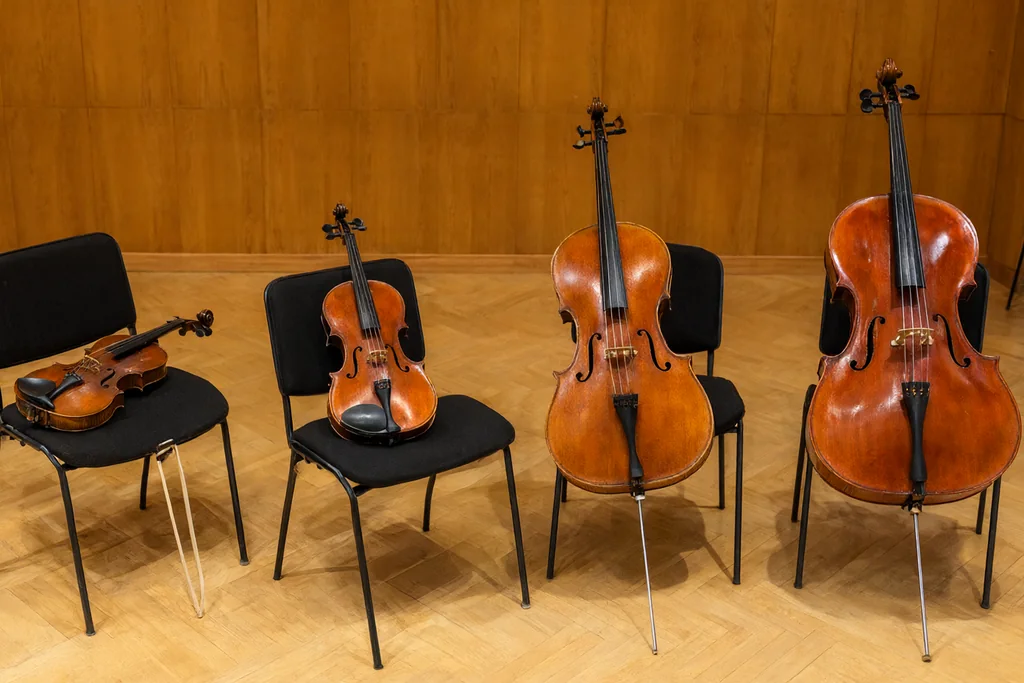
Texture is the word for how musical lines are combined: how many there are, whether they move together or separately, and which one the ear is meant to treat as the melody. It is one of the most immediately perceptible qualities of a piece and one of the least often named by casual listeners.
Learning three basic textures gives you a vocabulary for describing almost anything you hear, and a set of expectations about how a passage is likely to develop.
One line alone
A single unaccompanied line is the simplest texture. It may be a solo melody, a chant or a passage where other instruments rest. Because there is nothing to compete with, the ear attends to phrasing and nuance rather than to balance.
Solo passages often appear at moments of exposure: the start of a movement, or a cadence where everything else drops away. The composer is asking for attention.
Melody with accompaniment
In the most common texture, one line carries the tune while the others support it with chords or patterns. This is the texture of most songs and much of the concert repertoire, and it puts the listener in an easy position: the melody is obvious and the accompaniment can be safely ignored.
The craft lies in the accompaniment, which may be steady, restless, or quietly duplicating the tune somewhere else. A change in the accompaniment is often the first sign that the music is about to move on.
Several equal lines
- Two or more lines of equal interest, each worth following.
- Often built from imitation, where one line repeats what another has just played.
- Dense in the middle, clear at the edges, because the outer lines are easiest to track.
- Demanding but rewarding: attention shifts between voices rather than resting.
Polyphonic texture repays a patient approach. Choose one voice and stay with it for a whole passage rather than trying to hear everything at once.
Three textures compared
| Texture | Lines | Where you hear it |
|---|---|---|
| Single line | One | Solo openings, unaccompanied passages |
| Melody and accompaniment | One prominent, others supporting | Songs, much of the concert repertoire |
| Polyphony | Several of equal weight | Fugues, choral writing, chamber music |
| Chordal | All voices moving together | Hymns, chorales, solemn passages |
| Layered | Groups of lines stacked | Orchestral climaxes |
Texture as a structural signal
Changes of texture are among the clearest structural markers in music. A movement that begins with a single line and ends with the full ensemble has told you something about its journey. A sudden thinning to one instrument in the middle of a loud passage almost always marks a turning point.
Composers use this deliberately. The thinning is not a pause but a preparation, and the return of the full texture afterwards is the arrival the passage was built toward.
A practical exercise
Play a passage you know and answer one question: how many things are happening at once? The answer will change several times in a minute. Naming those changes is a complete description of the texture, and it requires no technical knowledge at all.
Where texture sits in the musical picture
Texture is one of several layers a listener can attend to, alongside melody, harmony, rhythm and orchestral colour. It is the layer most easily heard and least often discussed, which makes it a good first foothold. A listener who can describe texture can describe the difference between two passages even without naming a single note.
It also transfers across genres. The same three textures appear in a string quartet, a choral motet and an orchestral score, and recognising them makes the vocabulary of music criticism far less mysterious.
Where to go next
Choose a piece with a clear solo and a clear tutti section and listen only for the transition between them. That moment, where one becomes many, is where texture does its most obvious work.
Read next
How to follow a symphony without a score
A practical method for tracking movements, returns and big structural moments by ear.
Listening to a fugue: hearing one idea multiply
How to catch an entry of the subject and follow it as the texture thickens.
Dynamics, tempo and character: what the markings ask for
The instructions composers left on the page, and how they shape what you hear.